Friday, August 7, 2015

Battle of San Domingo 1806 (1/1200 sailing ships)

Yesterday, Dave and Byron came to my suite for a game pitting British against French ships of the line. The battle of San Domingo was the last fleet battle of the Napoleonic wars to be fought in open waters. Of notice, H.M.S. Canopus was commanded by captain Francis Austen, brother of Jane Austen. One of the most dramatic event of the battle happened when the Northumberland moved between the Impérial and the Superb to protect the flagship. Some shots from the giant French ship went right through the Northumberland and into the Superb. But, of course, wargaming was to redefine history.

At the beginning of this fleet engagement, British and French ships had to be set at least 15cm apart (measured from base to base, not main mast to main mast) in their respective deployment zones, to reflect the scattered aspect of the fleets too rapidly engaged in battle. This included ships from the Louis squadron entering on the map, that will enter the board with a die roll equal to or lower than the current turn number. This made it very difficult to form battle lines.

The objective of the French squadron was to escape to the South West corner with as many ships as possible. The objective of the British squadron was to intercept as many French ships as possible. Victory would be measured as follow:

5 French ships escape    Great French victory
4 French ships escape    French victory
3 French ships escape    Marginal French victory
2 French ships escape    Marginal British victory
1 French ship escapes    British victory
0 French ship escapes    Great British victory

The rules used were a simplified version of "Trafalgar" that I call "Trafalgar Redux". It speeds up the game considerably by halving the number of dice to be rolled.

The British squadron commanded by rear admiral Byron Duckworth, recognizable with the white name tags at the stern, duly proceeded to intercept the  French ships of Dave Leissègues, with blue name tags.

As I forgot my sea board at home, Byron was kind enough to bring his own sea mat from "Dreadfleet". Oddly enough, the mat and the ship bases matched perfectly.

The Agamemnon, a 64 gun third rate, the smallest ship on the board, sails toward the Impérial, the largest ship, with 120 guns. Is this wise?

BOOM! BOOM! After the smoke dispersed, it appeared that the Agamemnon lost two masts while the Impérial was still in good order. Both sides were mostly aiming at the masts at this point of the game, trying to reduce the speed of the opponent's units.

Soon, French and British ships were engaged in ferocious gun exchanges.

The British were able to get the second squadron on board. Rear Admiral Thomas Louis was eager to join the fight visible in the distance.

 Meanwhile, in the central melee, a few ships collided with each other and became unable to fire.

The three ships under the command of Louis, including the 80 gun Canopus, are getting closer and closer. Will this sceal the end of the French attempt to disrupt British commerce with the colonies? What could prevent a British Victory?


Wait a minute. What is this? A wind dial? So the wind changed direction. So what. I beg your pardon? It allowed a French victory? How is that even possible?

Because of the way the ships were positioned, after the wind changed direction, it became impossible for the British vessels still able to sail to catch three of the escaping French ships, including the giant Impérial. This was enough for a French marginal victory. This kind of event could only happen during the age of sail.

 Here are a few images of the last turn of the battle. A British ship caught fire during an exchange of volley causing the reserve of black powder to explode. The ship survived though.

Louis was just about to join battle. One of the French ships, invisible because she is completely wrapped in smoke, caught fire during an exchange of cannon balls, stroke her colours down as a result, then blew up because of an explosion.

On her way to the edge of the table, after an incredibly graceful tack manoeuver, the Impérial sunk a British ship trying to block her way. French sailors can cause surprises sometimes.

The action in the middle, on the last turn played. The black smoke shows were are located the two ships on fire, that eventually exploded without sinking. So the final result was: 3 French ships escaped, 2 were captured, 1 British ship was sunk and 2 were badly damage. The destruction and carnage felt very satisfying to the host.


Byron and Dave, discussing the outcome of the battle after it was decided to end the game when the result became obvious. The mat really made the whole experience look good. I'll definitely need to get one. Again, thanks Byron and Dave for playing this scenario.


Wednesday, August 5, 2015

Hill 62 / Sanctuary Wood Museum, Flanders


On our recent European trip, we visited Ypres (Ieper) and Flanders to visit some areas of interest that we missed in 2012. One of these was Hill 62/Sanctuary Wood, where there is a small private museum, near the Canadian Hill 62 memorial.

I've reproduced the very cool brochure that the museum provides to visitors. I really like the Art Deco-style design of the piece as well as the quaint language. It really has the look and feel of something produced in the late '20s or early '30s, which it very likely was!
 

LOL at the reference to the "Britisch Battle Fields"... 
  
Here's the exterior of the museum building. We visited on an overcast day in mid-June, it was gently drizzling rain.

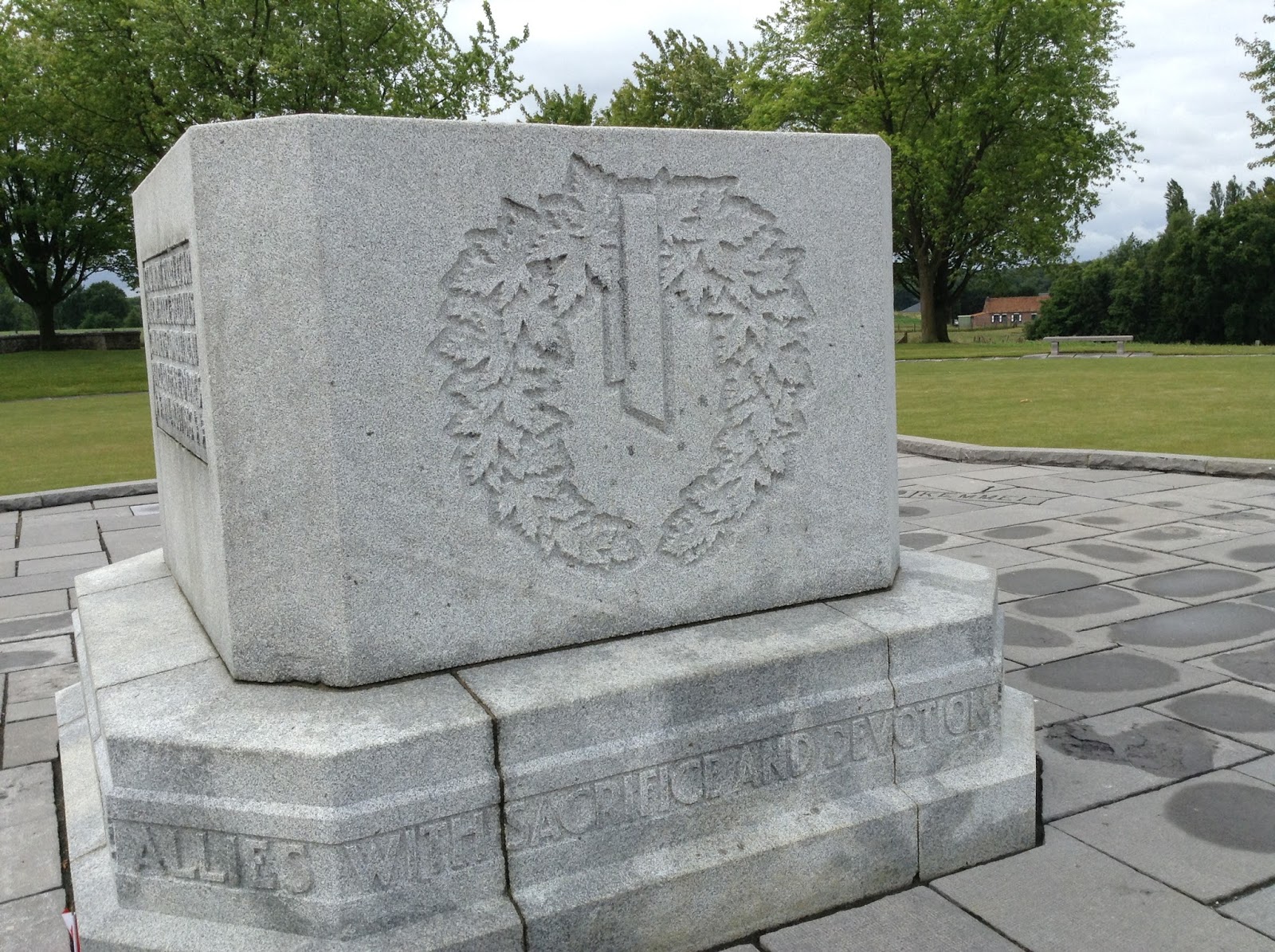
But before we went into the museum proper, we walked a couple hundred metres up the road to the Canadian Hill 62 memorial.


It's laid out so that visitors can determine the direction of the various villages that comprised the battlefield. The views from the memorial were beautiful and haunting, when you imagine what was going on here nearly 100 years ago.


The interior of the museum has a ton of artifacts but not a lot in the way of curation or explanation. But that's OK too, as long as the stuff is cool, which it was ;-)


Pam is contemplating the massive collection of pickelhauben. As an avid pickelhaube enthusiast, she was happy to see that her favourite state, Mecklenburg-Schwerin, was represented. Just kidding!

Strange pinball machine of unknown provenance.

Some very cool trench signs. I'll have to steal some of these ideas for our trench terrain - especially "DUMP".

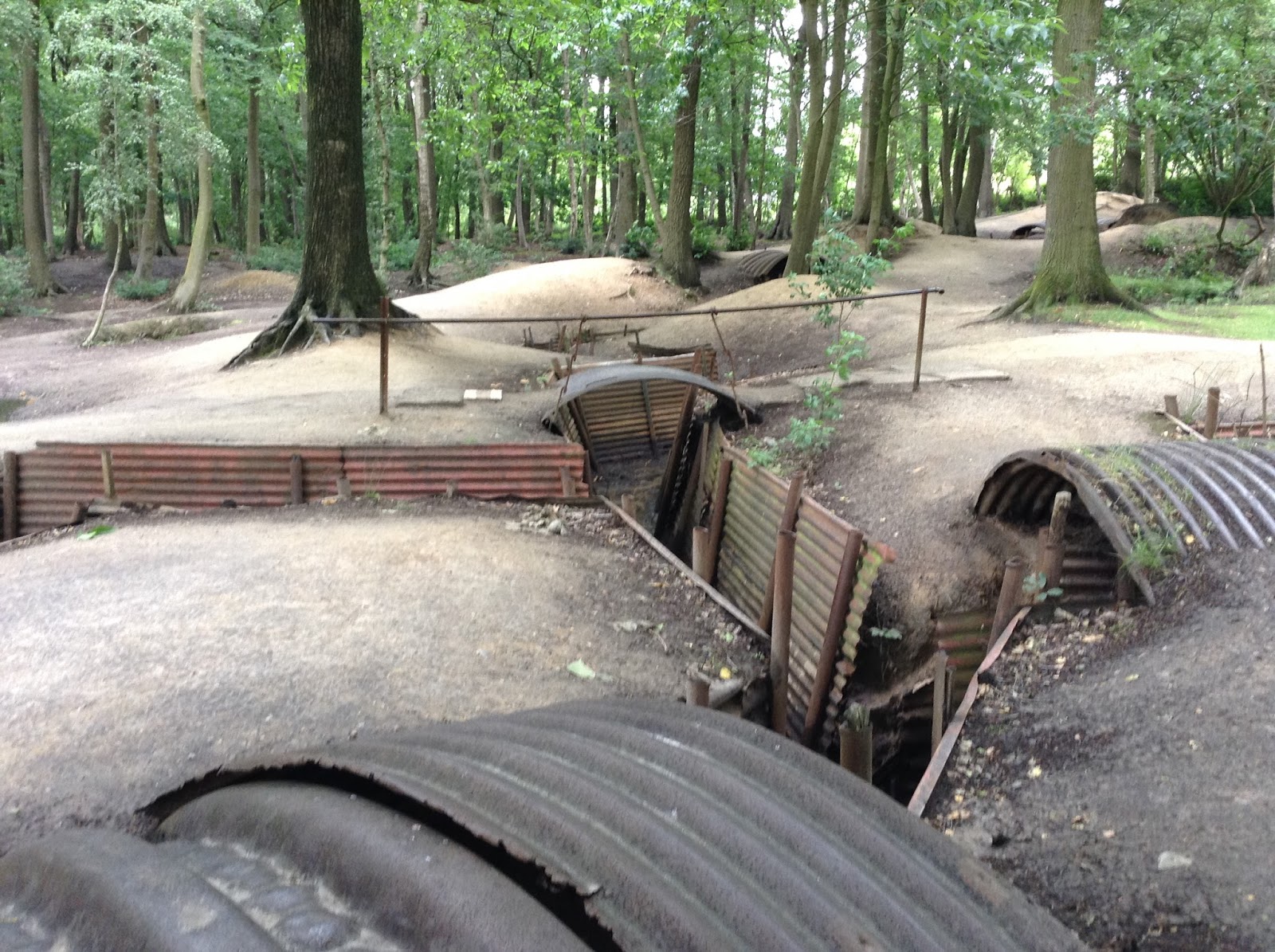
Outside the museum is an area that purports to be preserved period trenches. I say "purports to be" because I've read varying accounts on their strict authenticity. Whatever the case, the trench system here is certainly old, and its appearance is generally consistent with what you see in period battlefield photography.

Some rusty battlefield scrap including a broken "toffee-apple" mortar.


Shell craters abound. It had been raining earlier so many were filled with water.

Lots of scrap corrugated iron used to shore up trench walls and provide overhead protection.


Back in the year 2015, cattle were grazing peacefully.

Your correspondent.


There was an underground tunnel that stretched 20 metres or so connecting two trench entrances.


A Scottish schoolmistress with her charges.

Crosses laid by visitors on a splintered stump.


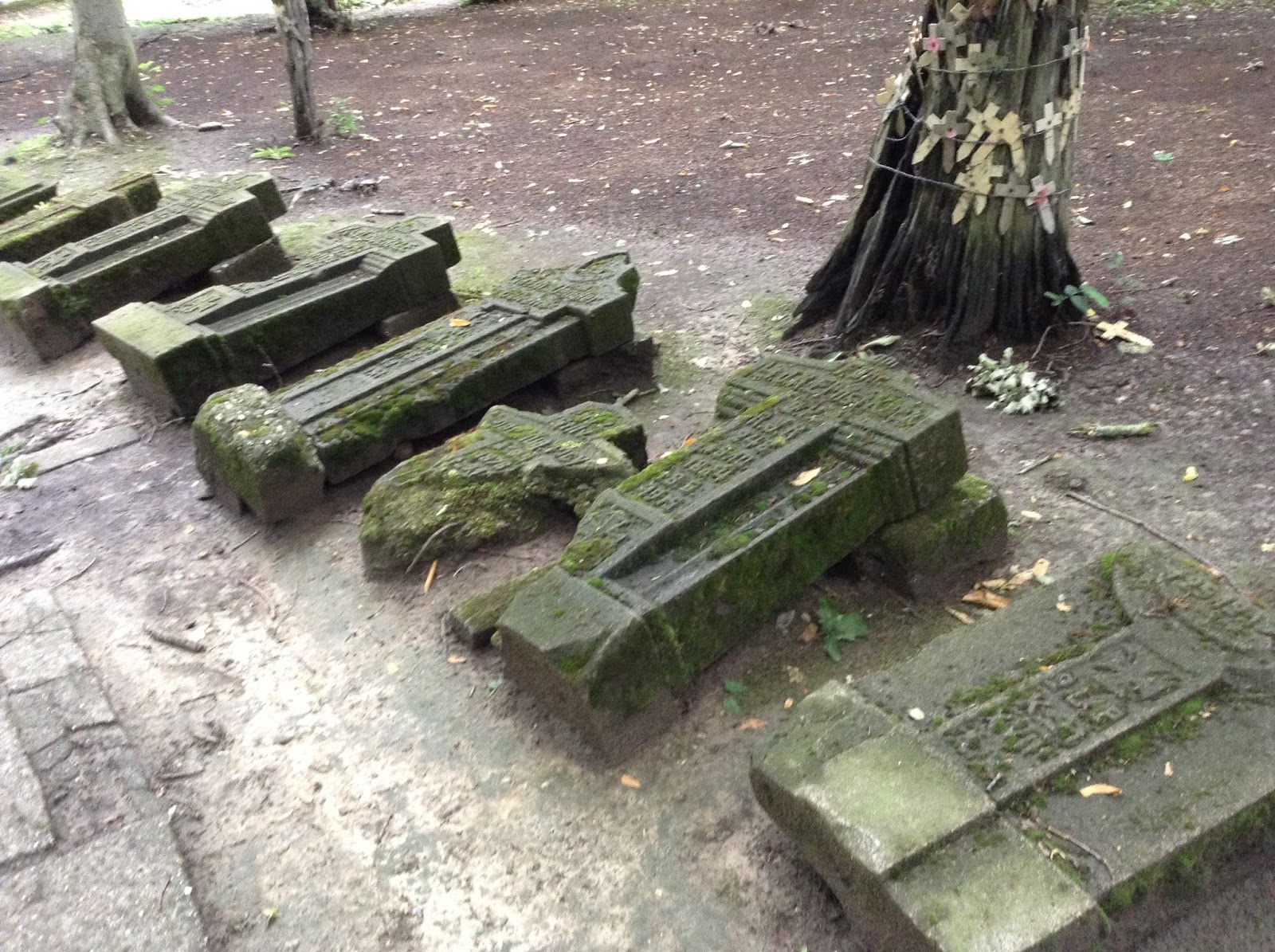
 These are German grave markers - most were dated 1914.

Rusty rolls of barbed wire.

More random battlefield detritus. The sheer volume of metal left on the battlefields of the Great War simply beggars imagination.

The museum and grounds are certainly well worth a visit. As I mentioned, the curation left a lot to be desired (and some of the mannequins used to display uniforms bordered on disrespectful), but for a person who knows a little about the Great War, you mainly want to just see artifacts anyway, and the Hill 62 Museum has those aplenty. The preserved trenches are very interesting too. If you go, be sure to check out the stereoscope viewers with tons of period photos. Their subject matter is not for the squeamish, but little about the Great War is.